Signed in as:
filler@godaddy.com
from our trees to your kitchen!
1/6
Our territory, our story
Our “cultivar” (or variety of olives) are 50 % Canino, 20 % Leccino, 20 % Frantoio and 10 % Moraiolo (or “Fosco”, in the local dialect).
Our fields are situated between Viterbo (beautiful medieval town, with one of the biggest medieval city centers in Europe) and Vetralla.
We have had an ornithologist come around and spend time on our fields to map the bird population and we have had specific nesting devices handmade to meet the birds’ needs and increase their population.
We don’t use ANY fertilisers other than the organic material from our very fields and we obviously don’t use any kind of pesticide. To keep the olives safe from the olive fly, we hang devices in the trees that have a hormone specifically for the olive fly, so the olive fly is drawn to (and trapped, yes) these devices, but it leaves all other insects and wildlife alone and doesn’t affect them in any way.
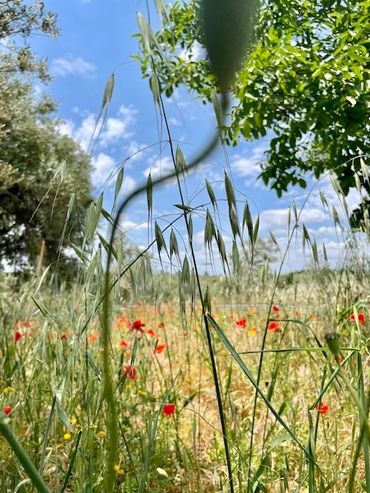
We never burn our trimmings, but rather cut them up finely, ferment them in the open field and then distribute it when it is starting to turn into humus. We make sure to cut back the flowers and herbs and grass in the field only after they have made their seeds, so a variety of wild herbs can grow back every year. We never turn the soil, which we find too invasive and also counterproductive on the long run (it disrupts the good work of microorganisms underneath the layer of top soil).
We protect our borders with shrubs, to increase biodiversity but also to shelter them.
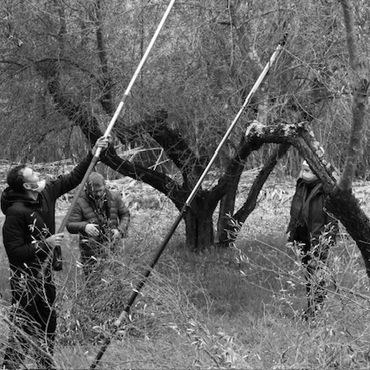
Our trees are all between 50-100 years old, and we were entruted with them and have the honour to care for them by their previous caretakershaving themselves groeing too old to continue the care and not having family member wanting to carry on and continue the legacy.
We produce and offer 100 % organically produced single origin extra virgin olive oil, grown and harvested in our fields in Lazio, Central Italy..
This is where our fields are located:
42.368713,12.070471
42.367645,12.073454
42.348370,12.071225
42°20'54.1"N 12°04'16.4"E
42.3532753, 12.0332590
OUR MISSION

..."Il nido artificiale simula sostanzialmente il buco, quelle cavità che si trovano spesso negli alberi vecchi, quelle cavità che si trovano sugli alberi vecchi. In mancanza di alberi molto vecchi abbiamo messo, diciamo "finto" questo buco. Il primo ed il secondo anno non ci e’ andato nessuno a fare il nido..dopodiché, due anni fà ho visto..per la prima volta una coppia di cince.. le cince sono uccelli insettivori molto utili nel controllo appunto degli insetti infestanti. Una piccola coppia di cince che ha nidificato. A fine stagione, mi trovavo proprio in questo periodo durante la raccolta delle olive, sono venuto qua ad aprire il nido per pulirlo.. perché è buona prassi, una volta all’anno, una volta che le cince lo hanno abbandonato pulirlo per mantenerlo efficiente. Siccome ci era stato anche un nido di vespe dentro, allora io per timore di essere pizzicato dalle vespe che cosa ho fatto? Sono venuto qui ed ho dato due pugni sul nido.. per spaventare eventualmente qualche vespa residua che ci fosse dentro..i realtà non centrano più , cera solo un nido vuoto..nel fare questo, è schizzato fuori un ghiro che aveva scelto il nido per passarci l’inverno.. e’ schizzato fuori questo ghiro che si è lanciato in mezzo alla vegetazione ed è scappato via terrorizzato.. e quindi questa storia per dire come un piccolo gesto ha comportato che: in primavera ci vengono le cince a nidificare, lo sfruttano anche le vespe per porre il loro nido, e poi d’inverno viene utilizzato dai mammiferi come il ghiro per lo svernamento. Per cui, piccole azioni che possano avere delle conseguenze reali..
Adesso, memore di quella lezione, non lo disturbo perché chissà che magari non ci sia ancora il ghiro dentro, non andiamo a rompergli le scatole, lo puliremo un’altra volta."


questions, orders or suggestions? Write to laura@u-na.eu
Via Aurelia Nord 60 Grosseto GR 58100
Open today | 09:00 – 17:00 |